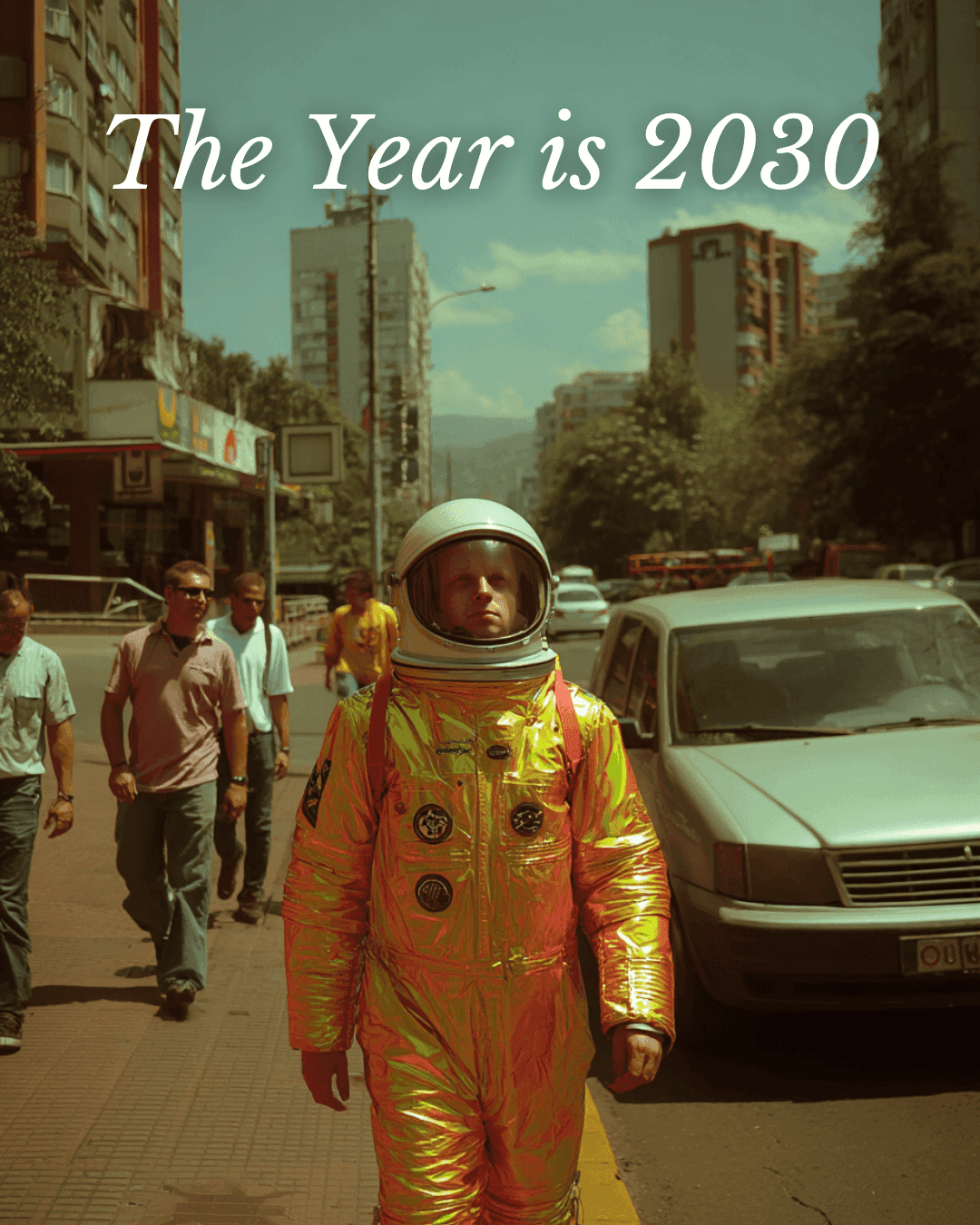
The Year is 2030
Future Vision
“The best way to predict the future is to invent it.”
The Journey
From Raw Facts to Lived Wisdom
Overview
Instead of forecasting from now, backcast from 2030. What does the world look like then? What is obviously true? Work backward to understand what to build today.
Backcasting
Working backward from a desired future state to identify what must happen to get there
Inevitable Futures
Outcomes that are clearly coming given current trajectories - not if, but when
Agency Over Prediction
Focus on what you can build, not what will passively happen
Raw Facts & Sources
The foundation. Verified facts, primary sources, and direct quotes that form the bedrock of understanding.
What do we know for certain?
Key Facts
- The future is largely visible to those paying attention
- Backcasting from a clear future vision reveals what to build now
- Exponential change is counterintuitive - we overestimate short-term, underestimate long-term
- The decisions you make today create the 2030 you will live in
Source Quotes
“The best way to predict the future is to invent it.”
— Alan Kay
Sources
Context & Structure
Facts organized into meaning. Historical context, core concepts, and why this matters now.
What does this mean?
Historical Context
Those who imagined the internet economy in 1994 had massive advantages. Those who imagine the AI economy in 2024 will have similar advantages.
Modern Relevance
AI is the most predictable transformation in history - the general shape is clear, the details are where competition happens.
Patterns & Connections
Insights that emerge from information. Mental models, cross-domain connections, and what most people get wrong.
What patterns emerge?
Key Insights
The future is more predictable than we pretend - we just don't like its implications
Five years is long enough for transformation, short enough for relevance
The question is not what will happen but what you will build
Present decisions compound toward future states
Mental Models
Action & Transformation
Knowledge applied to life. Practical applications, daily practices, and warning signs when you drift.
How do I live this?
Practical Applications
When: When making strategic decisions
→ Ask "In 2030, will I be glad I made this choice?" - work backward from there
✓ Decisions aligned with where things are going
When: When feeling overwhelmed by change
→ Sketch out what seems inevitable by 2030 - then figure out where you fit
✓ Clarity and direction
When: When building products
→ Design for the 2030 user, not the 2024 user - but ship in 2024
✓ Products that grow into their context
Reflection Questions
What is obviously true about 2030 that I'm not acting on?
What skills will be essential in 2030 that I'm not developing?
What am I building toward - and does it exist in 2030?
Daily Practice
When making a decision, ask "Does this make sense in a 2030 context?"
Warning Sign
When you're optimizing for the present at the expense of the obvious future, you're building on shifting sands.