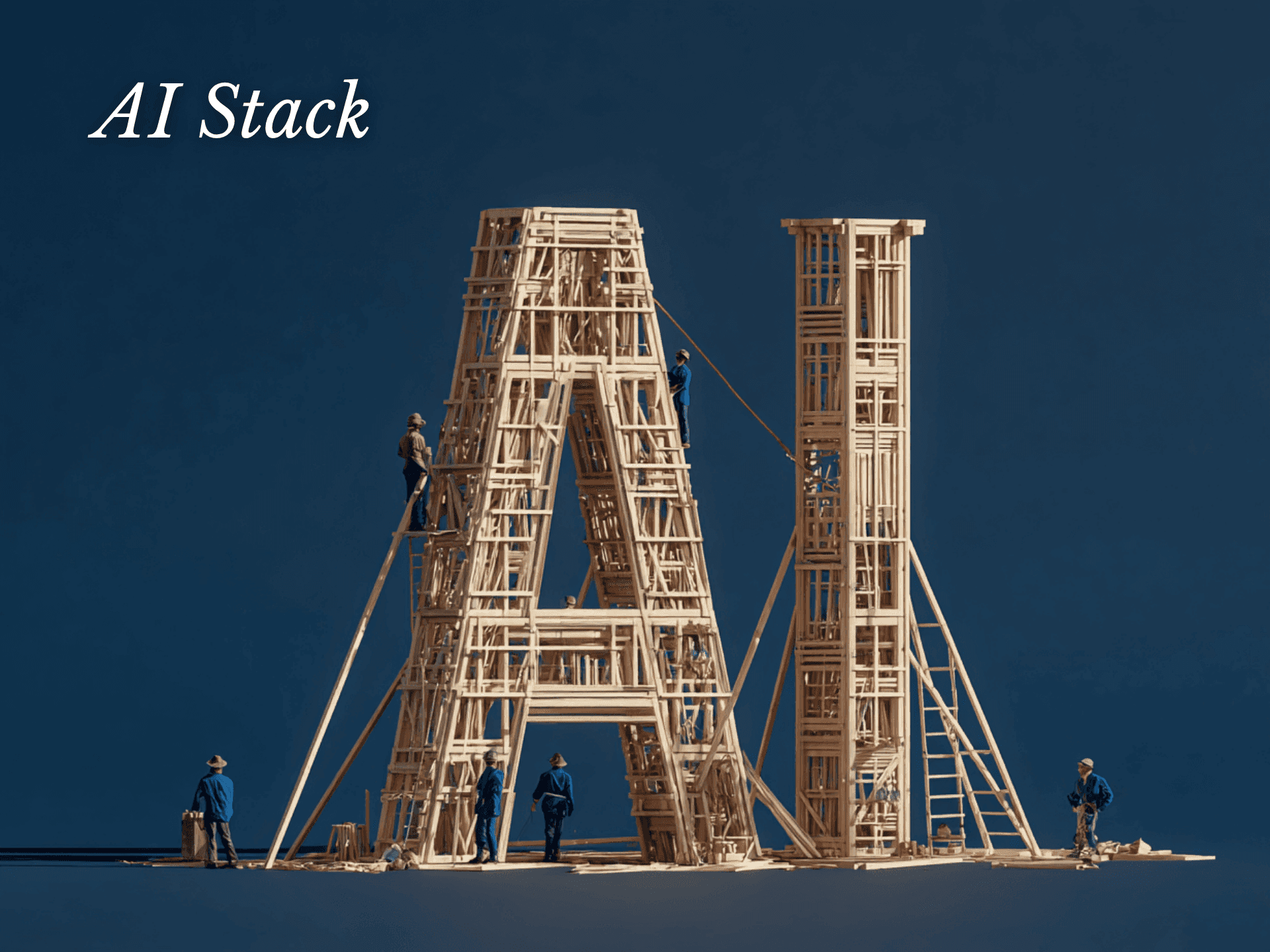
AI Stack
Building Blocks
“In AI, the stack is the strategy.”
The Journey
From Raw Facts to Lived Wisdom
Overview
The AI stack represents the layers of technology required to build AI applications. Understanding this stack reveals where value accrues, where to compete, and where to leverage commoditized layers.
Foundation Models
Large pre-trained models (GPT, Claude, Llama) that serve as base for applications
Orchestration Layer
Tools for connecting models to data, APIs, and workflows (LangChain, agents)
Inference Infrastructure
Systems for running models in production - latency, cost, reliability tradeoffs
Raw Facts & Sources
The foundation. Verified facts, primary sources, and direct quotes that form the bedrock of understanding.
What do we know for certain?
Key Facts
- The AI stack has distinct layers: compute, data, models, orchestration, applications
- Each layer has different leaders, economics, and strategic considerations
- The stack is rapidly commoditizing at lower levels while differentiating at higher levels
- Vertical integration vs. best-of-breed is a key strategic decision
Source Quotes
“In AI, the stack is the strategy.”
— Industry observation
Sources
Context & Structure
Facts organized into meaning. Historical context, core concepts, and why this matters now.
What does this mean?
Historical Context
Like the web stack before it (LAMP, MEAN), the AI stack is standardizing around common patterns while leaving room for differentiation.
Modern Relevance
Builders must decide where in the stack to compete and where to leverage existing solutions. The wrong choice means building on shifting sands.
Patterns & Connections
Insights that emerge from information. Mental models, cross-domain connections, and what most people get wrong.
What patterns emerge?
Key Insights
Build on the most stable layer you can - don't reinvent commoditized infrastructure
Differentiate at the layer closest to customer value
The stack is not static - what's differentiating today is commoditized tomorrow
Vertical integration makes sense when layers are tightly coupled
Mental Models
Action & Transformation
Knowledge applied to life. Practical applications, daily practices, and warning signs when you drift.
How do I live this?
Practical Applications
When: When starting an AI project
→ Map the stack first - identify which layers you need and which exist
✓ Avoid building what you should buy, buying what you should build
When: When evaluating AI companies
→ Ask "Which layer do they own? Is that layer defensible?"
✓ Better investment and partnership decisions
When: When feeling overwhelmed by AI landscape
→ Use stack thinking to organize - which layer is this solving?
✓ Mental clarity about a chaotic market
Reflection Questions
What layer am I trying to compete at? Is that the right layer?
What am I building that I should be buying (or vice versa)?
Which layers of my stack are stable and which are shifting?
Daily Practice
When encountering new AI tools, immediately categorize: which layer? commodity or differentiator?
Warning Sign
When you're building infrastructure instead of applications, check if you're at the wrong layer.